
Aster Identification: How to Recognize Aster Flowers
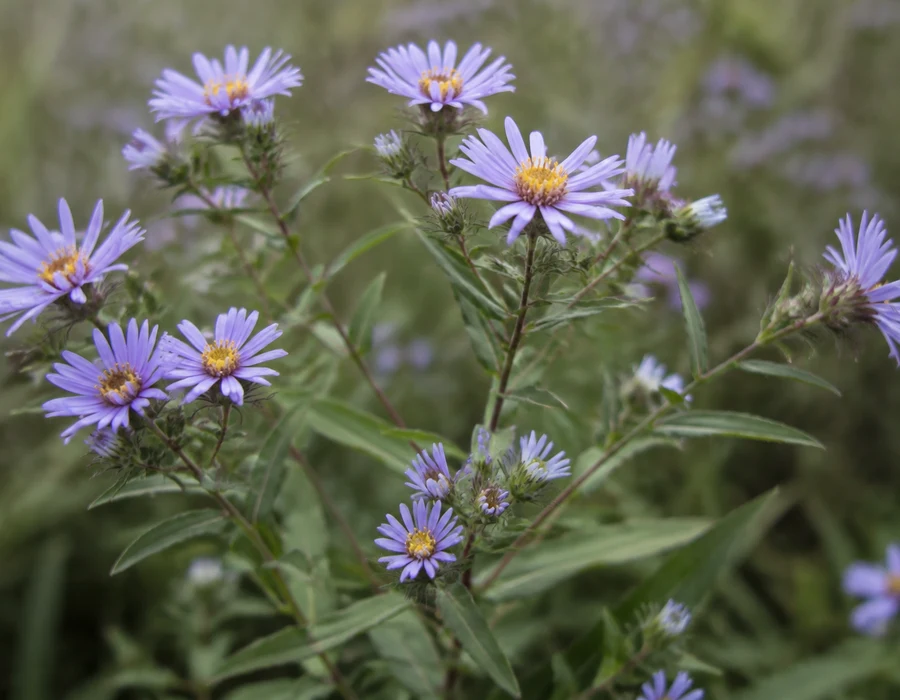
“Aster” can describe several daisy-family flowers, not one species. This guide focuses on the genera Aster and Symphyotrichum. Many North American plants once called Aster are now classified as Symphyotrichum. Both groups have flower heads made of central disc florets and outer ray florets. To identify one, examine the bracts below the head, the leaves along the stem, and the plant's branching pattern. Do not use the common name alone to decide flowering time, origin, or pet safety.
Key takeaways
- Asters have composite heads with ray florets around a central disc, usually carried above alternate leaves on flowering stems.
- Common daisy forms a low basal rosette with leafless flower stalks; this separates it from many garden asters more reliably than bloom colour.
- Some asters carry solitary heads, so branching alone is not a reliable identification test.
- Many North American plants called asters belong to Symphyotrichum, not Aster. Keep the scientific name with the identification.
- Garden asters commonly contribute summer-to-autumn flowers, but flowering time varies with the species and region.
What Does “Aster” Mean in Flower Identification?
In everyday use, “aster” often means a daisy-like flower with a central disc and an outer ring of rays. That description does not identify a single genus or species. This guide covers Aster L. and Symphyotrichum Nees. Both belong to Asteraceae, but they are different genera. Other plants are also sold or described as asters, so keep the scientific name with any identification.
Kew Plants of the World Online lists Aster and Symphyotrichum as separate genera. This distinction matters because the everyday name “aster” is often used for both, especially for North American plants.
A photo may show that a plant is aster-like and may point to one of these genera. It cannot provide a reliable species name, flowering calendar, native range, or pet-safety answer unless the plant is identified more precisely. Treat “aster” as a starting description, not a final identification.
Which Visible Traits Help Identify an Aster?
Asters in the defined group produce composite flower heads. Each head combines central disc florets with outer ray florets, so a single showy display contains many small flowers. Colour can be helpful for browsing, but the stronger visual evidence comes from the side of the head, the leaves on the flowering stem, and the way several heads are arranged on the plant.
| Trait | Aster and Symphyotrichum evidence | Why the trait helps |
|---|---|---|
| Flower head | A composite head with ray florets around disc florets | A close front photo shows the broad Asteraceae pattern, not a species by itself. |
| Side profile | An involucre of overlapping bracts, called phyllaries, sits below the head | A side view preserves structures hidden by a front-only image. |
| Leaf placement | Leaves are alternate along the stem in the named genera | A leaf-and-stem image is more useful than flower colour for separating aster-like candidates. |
| Flowering habit | Heads may be solitary or arranged in branching clusters, depending on the identified scientific name | The whole plant helps distinguish one head on a stalk from a multi-headed display. |
| Identification level | Aster and Symphyotrichum are different genera | More evidence is needed before choosing a species. |
Kew's genus descriptions support the alternate leaves and composite heads in both named genera. Photograph the head from the front and side, then include a leaf where it joins the stem. If several heads are present, photograph the branching arrangement as well. These views make an aster result inspectable rather than colour-led.
Check an aster-like plant from stem to head
- Start with a leaf attachment. In this defined group, leaves are alternate along the flowering stem. Photograph two successive nodes so the placement can be checked rather than inferred from one loose leaf.
- Turn the head sideways. The overlapping bracts below the head, called phyllaries, are hidden in a face-on photograph but help establish that the display is a composite head.
- Step back for the flowering pattern. Record whether one head is solitary or whether several heads arise on a branching stem. That pattern helps separate an aster-like plant from a low rosette with a single stalk.
- Stop at the level the evidence supports. These observations may support an aster-like identification. Choosing a genus or species may require more features and a regional plant guide.
The check begins on the stem because purple, white, pink, or blue rays can occur across many aster-family plants. A clear leaf node and head side profile are usually more useful than another close crop of the flower face.
How Do Asters Differ from Common Daisies?
The fastest useful distinction is to inspect the plant base and flowering stem. Common daisy, Bellis perennis, forms a low basal rosette and carries a solitary head on a leafless stalk. In contrast, a plant within this defined aster group has alternate leaves on its stems. A photo of leaf placement can therefore be more informative than a front view of white or purple rays.
This difference does not mean that every aster looks identical. Some asters carry one head, while others have several heads on branching stems. Start with a clear stem, a leaf where it joins the stem, the side of the flower head, and the whole plant. The daisy versus aster comparison places these features side by side.
Read the common daisy identification page when the plant appears low in grass with a compact leaf rosette. If the image lacks leaves and stems, collect those views before treating either name as confirmed.
The boundary is easier to keep when the observations are placed side by side:
| Observation | Common daisy, Bellis perennis | Defined aster group | What the photograph must show |
|---|---|---|---|
| Plant base | A compact basal rosette | A flowering stem with leaves along it | The lowest visible leaves and the first flowering stem |
| Leaf position | Leaves remain at the base | Leaves are alternate on the stem in the named genera | Two successive stem nodes, not one detached leaf |
| Flower display | A solitary head on a leafless stalk | A solitary or branching head display, depending on the identified scientific name | A full flowering stem and a view of nearby heads |
This is a decision table, not a substitute for a regional flora. If the specimen has a leafy stem but the leaves are not alternate, or it has a rosette but several heads on a branched stalk, do not force either side of this comparison. Record what the photo shows and describe the plant as a daisy-like composite until a local guide can confirm the genus or species.
Why Does the Exact Aster Name Matter?
Once the visible traits support an aster-group candidate, identify the genus or species before checking flowering time, geographic range, or pet safety. The word “aster” covers many plants with different distributions and safety records.
When and Where Do Asters Bloom?
There is no single bloom season or geographic range for the defined aster group. Kew records Aster across temperate Eurasia, northwestern Africa, and parts of North America. Kew records Symphyotrichum across temperate Asia and the New World. Those broad genus ranges explain why a local season or habitat cannot identify the plant by itself.
A published species record can provide a sourced bloom range for its declared geography and climate. Until then, use season only as supporting context. Record the month, region, habitat, and whether the plant is wild-growing or cultivated, then compare those details after the visual candidate has been identified. The flower bloom calendar is the place for cited, species-level seasonal records rather than a generic aster date.
For an aster-like plant, the useful regional note is not simply a country name. Record whether the plant is in a managed border, meadow, roadside, disturbed ground, container, or cut-flower arrangement. That setting does not establish identity or native status, but it helps a local plant guide make a better comparison. A published range applies to the named plant and the location described by the source, not to every flower with narrow rays.
Is This Aster Toxic to Cats, Dogs, or People?
An aster-group result is not a cat, dog, or people safety verdict. The current ASPCA China Aster record identifies Callistephus chinensis, which is not one of this page's named genera. The ASPCA Giant Aster record identifies Townsendia sericea, another different scientific name.
| Question | Evidence-based answer |
|---|---|
| Can a safety record for China aster be applied to an unidentified aster? | No. The entry applies to Callistephus chinensis. |
| Can a safety record for giant aster be applied to the defined group? | No. The entry applies to Townsendia sericea. |
| What is needed before a safety claim is shown? | A reliably identified scientific name and a current, cited animal-specific record. |
For a possible plant exposure or animal illness, contact a veterinary professional or an appropriate animal poison service promptly. Do not wait for photo analysis. The cat-safety directory and dog-safety directory should display the scientific name tied to each record so an aster common name does not merge unrelated plants.
Can a Photo Verify This Aster?
A photo can test whether the visible plant fits the defined aster group, but it cannot reliably settle every aster to species. Add a front view of the head, a side view showing the bracts below it, a leaf attached to the stem, and a whole-plant view that shows whether heads are single or clustered.
Use the Flower Identifier to ask whether the plant resembles Aster or Symphyotrichum. Include the flower front and side, attached leaves, and the whole stem. If an important feature is missing or conflicts with those groups, the result should remain at “aster-like” until you can add a better view.