
Chamomile Identification: How to Recognize Chamomile Flowers
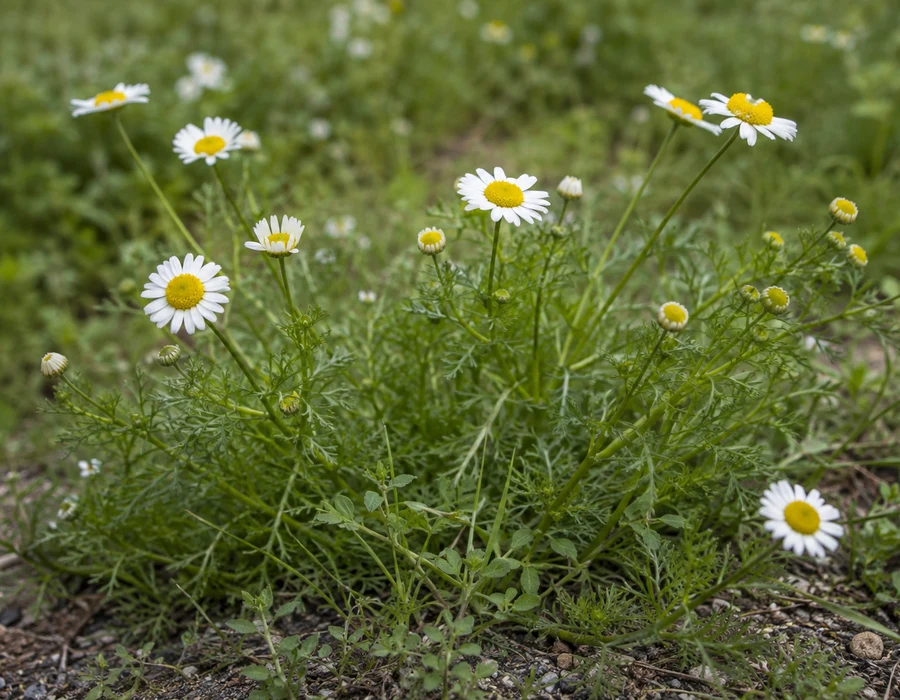
Roman chamomile (Chamaemelum nobile) is the focus here; German chamomile (Matricaria chamomilla) remains a separate plant. Roman chamomile is a low, mat-forming perennial with finely divided leaves and small white, yellow-centred composite flower heads. Roman chamomile foliage and growth habit distinguish Roman chamomile more reliably from common daisy than the bloom face alone. Regional bloom timing needs a local source, while the current ASPCA safety record applies through the synonym Anthemis nobilis. A photo should show the foliage, flower side, and whole plant before confirmation.
Key takeaways
- Roman chamomile (Chamaemelum nobile, also called Anthemis nobilis) is a low, mat-forming perennial with finely divided foliage.
- Its flower heads have white ray florets around a yellow disc, a pattern shared with several daisy-like plants.
- Common daisy has broad, spoon-shaped rosette leaves rather than chamomile's finely divided leaves.
- German chamomile (Matricaria chamomilla) is a different, more upright annual, not another scientific name for Roman chamomile.
- Photograph the foliage and whole growth habit with the bloom; scent or a familiar tea name does not confirm identification.
What Does “Chamomile” Mean in This Identification Guide?
“Chamomile” is a common name applied to more than one plant. This guide covers Roman chamomile, Chamaemelum nobile. German chamomile, Matricaria chamomilla, is a different species. Both have daisy-like flower heads, but Roman chamomile is a low perennial and German chamomile is a taller, branching annual.
Kew Plants of the World Online lists Chamaemelum nobile as Roman chamomile and Matricaria chamomilla as German chamomile. The Royal Horticultural Society profile for Roman chamomile also lists Anthemis nobilis as an older scientific name for Roman chamomile.
The older name matters because the ASPCA chamomile record uses Anthemis nobilis. That record applies to Roman chamomile, not every plant called chamomile. If the plant is an upright, branching annual, compare it with German chamomile before using flowering or safety information.
Which Visible Traits Help Identify Chamomile?
Roman chamomile is a low, mat-forming perennial with finely divided foliage and white, yellow-centered, daisy-like composite heads. A close front image can show the white rays and yellow disc, but that appearance overlaps with common daisy and other members of Asteraceae. The foliage and the whole-plant habit carry more identifying weight.
| Trait | Roman chamomile, Chamaemelum nobile | Why the trait helps |
|---|---|---|
| Growth habit | A low, mat-forming perennial | A whole-plant photo distinguishes a spreading low plant from a flower on a solitary leafless stalk. |
| Leaves | Finely divided foliage | A close leaf image can separate the Roman-chamomile hypothesis from the broad, spoon-shaped basal leaves of common daisy. |
| Flower head | White rays around a yellow central disc | The face supports an Asteraceae-style composite head, but does not identify the species alone. |
| Side view | A side view shows how the head sits above the finely divided foliage | This view connects bloom evidence to plant habit and can reveal what a front-only image hides. |
| Scientific name | Chamaemelum nobile, with Anthemis nobilis as a listed synonym | The two names connect modern references with sources that use the older name. |
The RHS identifies Roman chamomile as mat-forming with finely divided leaves and small daisy-like flowers. Do not rely on fragrance, taste, or handling an unknown plant to identify it. A photograph of the leaves, flower side, and full growth pattern is safer and more useful than a sensory test.
Check Roman chamomile from foliage to flower
- Find the plant's overall form. The Roman-chamomile pattern is a low, mat-forming perennial, not one isolated head on a tall, bare stalk.
- Inspect the foliage before the flower face. Photograph a complete section of the finely divided leaves. This is more informative than a white ray and yellow centre shared with many daisy-like plants.
- Link the head to the foliage. Take a side view that shows how the composite head is held above or among the leaves. A cropped bloom cannot show the growth pattern.
- Check German chamomile when the plant is upright. A branching annual or foliage that does not fit the low Roman chamomile pattern needs a separate comparison. Do not apply Roman chamomile's flowering or pet-safety information to it.
This order keeps the most discriminating field evidence in view and avoids using fragrance, a product label, or a tea-related association as identification evidence.
How Does Chamomile Differ from a Common Daisy?
The most useful contrast is foliage. Common daisy, Bellis perennis, forms a basal rosette of broad spoon-shaped leaves and carries its flower head singly on a leafless stalk. Roman chamomile has finely divided leaves and a low mat-forming habit. A flower-face comparison alone leaves too much overlap.
Take one image of the leaf structure and another that shows the plant from the side. The daisy versus chamomile comparison uses those two observations as the starting point. The common daisy identification page explains why a low rosette and leafless flower stalk matter for Bellis perennis.
Roman chamomile and German chamomile are a separate distinction. Sources can describe one as a perennial and the other as an annual, but a photo still needs the relevant leaves, branching, and head structure. A common-name label from a seed packet, tea box, or casual conversation does not confirm the plant in front of you.
Keep the three naming questions separate before moving on:
| Question | This page's answer | Evidence still needed |
|---|---|---|
| Does the plant fit common daisy? | Test the basal rosette and leafless stalk against Roman chamomile's finely divided foliage and low habit | A leaf view and a whole-plant side view |
| Does the plant fit Roman chamomile? | Compare it with Chamaemelum nobile | The foliage, flower side, and growth pattern |
| Is it another plant called chamomile? | The common name alone cannot decide | Check the leaves, branching pattern, and scientific name |
An older scientific name can still refer to the same plant, while a shared common name may not. Keep Chamaemelum nobile and its synonym Anthemis nobilis together when reading safety information. Do not use a tea label, scent, crushed foliage, or intended use to identify Roman or German chamomile.
Why Does the Exact Chamomile Name Matter?
After Roman chamomile is visually narrowed, its seasonal and safety information belongs to Chamaemelum nobile and its documented synonyms. Those facts cannot be transferred to German chamomile, corn chamomile, stinking chamomile, or other daisy-like plants that a person may call chamomile.
When and Where Does Roman Chamomile Bloom?
Kew records the native range of Chamaemelum nobile as the Azores, western Europe, and northwestern Africa, with introductions recorded elsewhere. A plant found beyond that native range should not be called native from a photograph. A garden planting or naturalized occurrence needs local context and an appropriate regional record.
The RHS profile marks Roman chamomile as active from spring through autumn in UK gardens. That range may include foliage as well as flowers, so it should not be read as an exact flowering period. Flowering time also changes with local weather and growing conditions. Use a flower record from your region when the month matters.
For a photograph, a month is most useful after the plant has passed the foliage test. Record the date with the place and whether the plant is a garden planting, a container specimen, or growing outside a managed bed. Those details do not turn a broad flower name into an identity, but they let a later source comparison use the correct region and plant context.
Is Roman Chamomile Toxic to Cats, Dogs, or People?
Yes for cats and dogs. The current ASPCA Chamomile record identifies Anthemis nobilis, which the RHS lists as a synonym of this page's Roman chamomile, Chamaemelum nobile. ASPCA lists the scientific name as toxic to cats and dogs.
| Subject | Plant covered by the record | Current cited status |
|---|---|---|
| Cats | Anthemis nobilis, synonymous with Chamaemelum nobile in the RHS profile | Toxic in the ASPCA record |
| Dogs | Anthemis nobilis, synonymous with Chamaemelum nobile in the RHS profile | Toxic in the ASPCA record |
| People | No people-safety verdict is provided on this page | Do not infer food, tea, or treatment safety from a flower identification. |
For a possible pet exposure or animal illness, contact a veterinary professional or an appropriate animal poison service promptly. Do not wait for a photo result. Use the cat-safety directory or dog-safety directory to see the scientific name attached to a cited record. This page does not provide treatment, dosage, or ingestion advice.
Can a Photo Verify Chamomile?
A photo can test whether a plant fits Roman chamomile, but a bloom face by itself is not enough. Add a close image of the finely divided foliage, a side view of the flower head, and a whole-plant view that shows its low mat-forming habit. These are the strongest follow-up views when the image might otherwise be confused with common daisy or another flower called chamomile.
Use the Flower Identifier to ask whether the plant fits Roman chamomile, Chamaemelum nobile. Add a leaf and whole-plant view when the first photo shows only the flower. A chamomile-like appearance does not prove that a plant is edible, medicinal, or safe.