
Peony Identification: How to Recognize Peony Flowers
Peony (genus Paeonia) in this guide does not mean a cultivar name inferred from a photograph. Peonies can show bowl-shaped, open, or densely layered flowers, so bloom color and fullness are not enough on their own. A full plant, leaves, and stems help distinguish a peony from a rose and from other peony-like flowers. The genus spans many species and cultivated forms, so bloom timing varies. The current ASPCA peony record is limited to the scientific name it names, which means pet safety needs exact-name verification.
Key takeaways
- Peonies (Paeonia) combine bowl-shaped or densely layered flowers with divided leaves and a clumping or shrubby growth habit.
- Herbaceous peonies die back above ground; tree peonies retain woody stems. A woody stem does not rule out peony.
- Roses usually have prickled canes and serrated leaflets, making the foliage and stems more useful than petal fullness for this comparison.
- Peonies generally have a relatively short flowering season in late spring to early summer in UK gardens.
- Flower colour and petal count can suggest a garden form but cannot reliably establish a named peony cultivar.
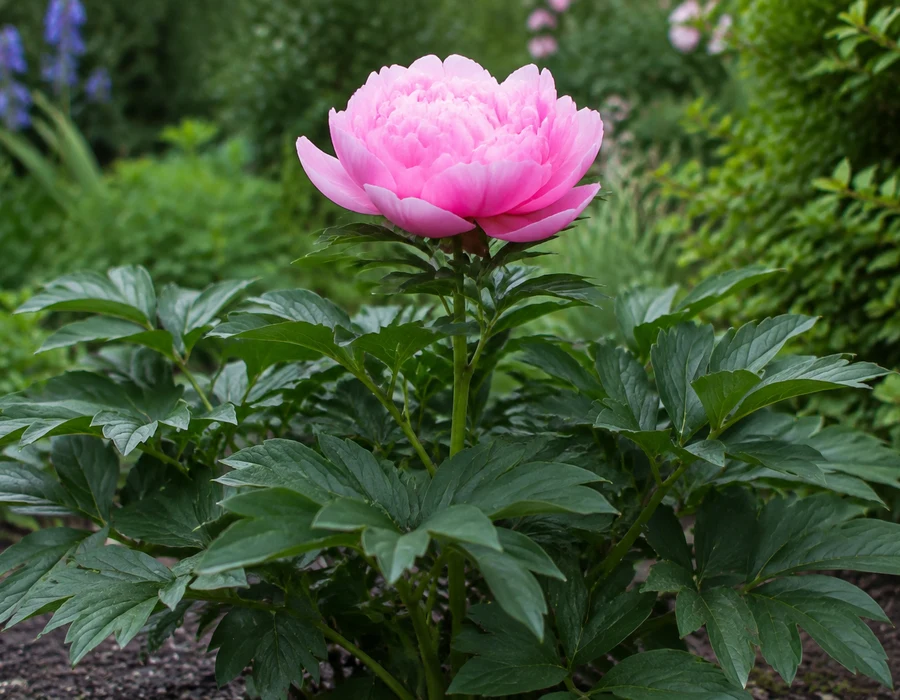
How Do You Identify a Peony?
Peony is the common name for the genus Paeonia in the family Paeoniaceae. The group contains multiple species and many garden cultivars. A photo can often support a peony-group identification, but it cannot reliably choose a named cultivar from petal count, colour, or one full bloom.
The flower can be open and bowl-shaped or heavily layered with many petals. The RHS peony genus guide describes blooms that range from more open forms to flowers crowded with petals. That variation makes a layered silhouette useful for resemblance, not a sufficient final identity. A robust photo set includes the open flower, a side view, a complete leaf, the stem, and the whole plant.
| Trait | Peony, Paeonia species | Why the trait helps |
|---|---|---|
| Flower form | Bowl-shaped blooms that may be open or densely layered | The bloom supports a peony-group candidate but cannot determine a cultivar. |
| Flower center | Open blooms can show central reproductive structures; double blooms can hide them | A less crowded flower or a side view can provide more information than a fully double bloom. |
| Foliage | Leaf shape and division vary across the genus and cultivated forms | Photograph a complete leaf and its attachment rather than relying on a general leaf label. |
| Stems and habit | Garden peonies include more than one plant form | A whole-plant image prevents an identity from resting only on a layered flower. |
| Identification level | Paeonia species | A general photo may identify the genus without identifying a species or cultivar. |
Kew Plants of the World Online lists Paeonia and many species in the genus. The features in this guide help identify a peony. A species or cultivar name may require more detailed leaves, stems, flowers, and provenance.
Check a peony from plant form to bloom
- Show the plant, not only the flower. Record whether the plant is a leafy herbaceous clump or has woody stems. The two forms require different comparisons, while a front-facing bloom may look equally full.
- Photograph a complete leaf at its attachment. Leaf division and the point where the leaf meets the stem add useful evidence without pretending that one garden peony type defines the whole genus.
- Use a side view to read bloom construction. An open, partly open, or less crowded bloom can show the centre and depth more clearly than a fully double flower.
- Compare the leaves and stems before deciding. A woody, prickled stem with pinnate serrated leaves points toward Rosa. A flower that looks peony-like but lacks visible foliage may remain unidentified.
Cultivars vary widely, so collect better evidence instead of guessing. Keep the identification at peony-like or Paeonia until the leaves, stems, and whole plant support something more precise.
Which Peony Traits Separate It from Similar Layered Flowers?
The most useful peony traits are not a specific color or a claim that every bloom is double. Start by separating the flower from the plant. A many-petaled bloom may look like a rose, camellia, or ranunculus from the front. The supporting leaves, stems, and growth form carry the information that a close bloom photograph leaves out.
Photograph the flower from the side first. The side profile shows how deeply the petals are layered and whether the central structures remain visible. If several blooms are at different stages, include one that is opening. A fully open, crowded flower can hide the details that a developing bloom reveals.
Then photograph a complete leaf and the point where it meets the stem. The North Carolina Extension profile describes herbaceous garden peonies with compound, alternate leaves. Other Paeonia species and cultivated forms can differ, so use that pattern as a comparison rather than a rule for every peony.
Finally, show the whole plant. An upright, leafy herbaceous form and a woody peony form need different comparison questions. The full view lets a result distinguish a flower resemblance from a plant-level match. Color remains useful for browsing, but it should follow structure rather than lead it.
How Does a Peony Differ from a Rose and Other Peony-Like Flowers?
A peony and a rose can both have large layered blooms, which is why a flower face alone often leaves the comparison unresolved. The difference becomes clearer away from the petals. A rose belongs to Rosa, usually has prickly woody stems and pinnate serrated leaves. A peony belongs to Paeonia and needs its own leaf, stem, and whole-plant evidence before a group-level identification is supported.
Use peony versus rose when both candidates remain plausible. The comparison is for an identity question: which plant structure supports Paeonia or Rosa? Use flowers that look like peonies when the bloom looks peony-like but the evidence may point to a different flower. Identity and resemblance are useful in different moments and should not be merged into one verdict.
The rose identification page explains the genus-level rose features to compare. A peony-like flower without a visible leaf or stem remains an open question, even when the bloom is full and familiar.
| Observation | Peony-group guide | Rose guide | Why the distinction can remain open |
|---|---|---|---|
| Stem and base | A leafy herbaceous clump or a woody tree-peony form | A woody cane or climbing shoot | Tree peonies show why woody stems alone cannot settle the pair |
| Leaf evidence | A complete divided peony leaf and its attachment | A pinnate leaf with serrated leaflets on a central stalk | A cropped or detached leaf hides the attachment pattern |
| Bloom view | A broad bowl or layered bloom considered with the plant | A cup or rosette considered with the plant | Double forms can conceal the centre in either group |
Use this as a rule-out order. Start with the complete leaf and plant base, then use the side view of the bloom to check whether the structures agree. A photograph of only a double flower is enough to describe a layered bloom, not enough to choose between Paeonia, Rosa, and every other peony-like garden flower.
Why Does the Exact Peony Name Matter?
After a photo fits the Paeonia group, bloom timing and safety information still depend on the species, hybrid, or cultivar. The genus includes many species across a broad native range, and a record for one named peony does not automatically describe every garden peony.
When and Where Do Peonies Bloom?
Kew records Paeonia from eastern central and southern Europe through temperate Asia, with a native range also extending to northwestern Africa and western North America. That broad group range rules out a universal bloom date. A local peony can be a species, hybrid, or cultivar whose flowering pattern differs from another plant called peony.
The RHS says peonies in UK gardens usually flower for a short period from late spring to early summer. Climate, species, and cultivar can shift that period. Use the flower bloom calendar for comparisons that match the identified plant and location.
The useful field note is the plant's form as well as the date. Record whether the plant is a herbaceous clump, a woody peony, a cut flower, or a photographed garden cultivar. That preserves the context needed to compare a source window without presenting one regional garden pattern as the bloom date for every peony.
Are Peonies Toxic to Cats, Dogs, or People?
The current ASPCA Peony record lists “Paeonis officinalis” as toxic to cats and dogs. The scientific name shown in that record is not a group-level record for every Paeonia species or cultivar. This page therefore does not extend the ASPCA verdict to an unresolved peony photo or to all plants sold as peonies.
| Question | Evidence-based answer |
|---|---|
| What scientific name does the current ASPCA peony record name? | The record names “Paeonis officinalis.” |
| Does that record establish a verdict for every Paeonia species? | No. It applies only to the plant named in the ASPCA record. |
| What is required before a safety claim is shown? | A reliably identified scientific name and a current, cited animal-specific record. |
For a possible pet exposure or animal illness, contact a veterinary professional or an appropriate animal poison service promptly. Do not wait for a photo result. Use the cat-safety directory and dog-safety directory to inspect the scientific name that a cited record actually names. This page does not provide treatment, dosage, or ingestion advice.
Can a Photo Verify a Peony?
A photo can test whether a plant fits Paeonia, but it should show more than a layered bloom. Add an open or partly open flower, a side profile, a complete leaf, the point where the leaf meets the stem, and the whole plant. These views help distinguish a peony group result from a rose or another peony-like flower.
Use the Flower Identifier to ask “Does this plant fit Paeonia?” A careful result should identify the visible structures that support the group, name a conflict or alternative when necessary, and request the missing view that will best reduce uncertainty. It should not turn a general flower photo into a named cultivar or an unverified pet-safety claim.